
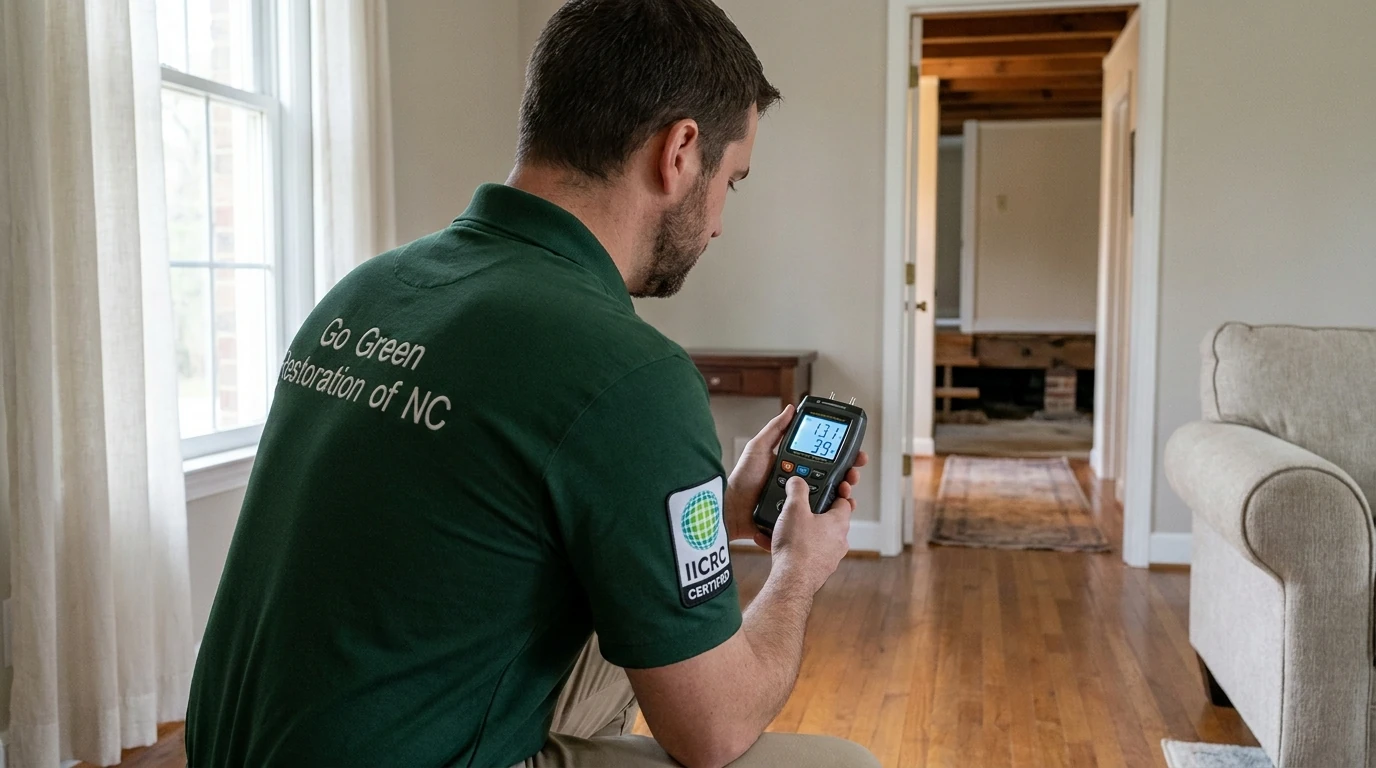
TL;DR: Most humid houses have one of two problems: an air conditioner that’s oversized or short-cycling, which cools the air without running long enough to pull moisture out of it, or a vented crawl space pumping ground moisture up into the living space. The EPA recommends keeping indoor relative humidity between 30 and 50 percent. A portable or whole-house dehumidifier treats the symptom inside the rooms you live in; sealing and conditioning a wet crawl space removes the source feeding it.
If you’re running the AC at 70 degrees in a home near Downtown Middlesex or along the US-264 corridor and the air still feels clammy, or your windows sweat and towels never fully dry, the thermostat isn’t lying to you. Eastern NC humidity doesn’t fully disappear when summer ends either; plenty of pier-and-beam homes in this area stay sticky into October because the moisture source is under the house, not in the air handler. Here’s how to find the actual cause and fix it instead of just running a box fan and hoping.
Why Is My House So Humid With the AC Running?
An air conditioner cools air, but it only pulls moisture out while it’s actually running long enough to pass air across a cold evaporator coil. An oversized unit, or one on a thermostat set too aggressively, satisfies the temperature setpoint fast and shuts off before it has dehumidified much of anything. The room reads cold and still feels damp.
A few other common culprits stack on top of that: a dirty evaporator coil that can’t condense moisture efficiently, return ducts that run through an unsealed crawl space and pull in humid outside air through leaky joints, or a thermostat fan setting left on “on” instead of “auto,” which re-evaporates condensation back into the airstream between cooling cycles. If your ductwork runs under the house, a duct cleaning and inspection will often turn up the leaks that are letting crawl space air bypass the filter entirely.
What Should Indoor Humidity Be in a House?
Indoor relative humidity should stay between 30 and 50 percent, according to the EPA’s guidance on mold and moisture control. Above 60 percent for extended periods, dust mites and mold both find the conditions they need to establish themselves.
A $15 hygrometer from any hardware store gives you a real number instead of a guess. If yours reads 55 to 65 percent on a mild October afternoon with the AC cycling normally, something besides outdoor weather is adding moisture to the house. Musty smells, foggy windows, or a sagging feeling in carpet and baseboards are early warning signs worth checking against our guide on signs of hidden mold before it becomes a bigger problem.
Can a Wet Crawl Space Raise Indoor Humidity in the House?
Yes. A vented, unsealed crawl space is one of the most common and most overlooked sources of whole-house humidity in Eastern NC, and it’s the piece most national humidity guides skip entirely.
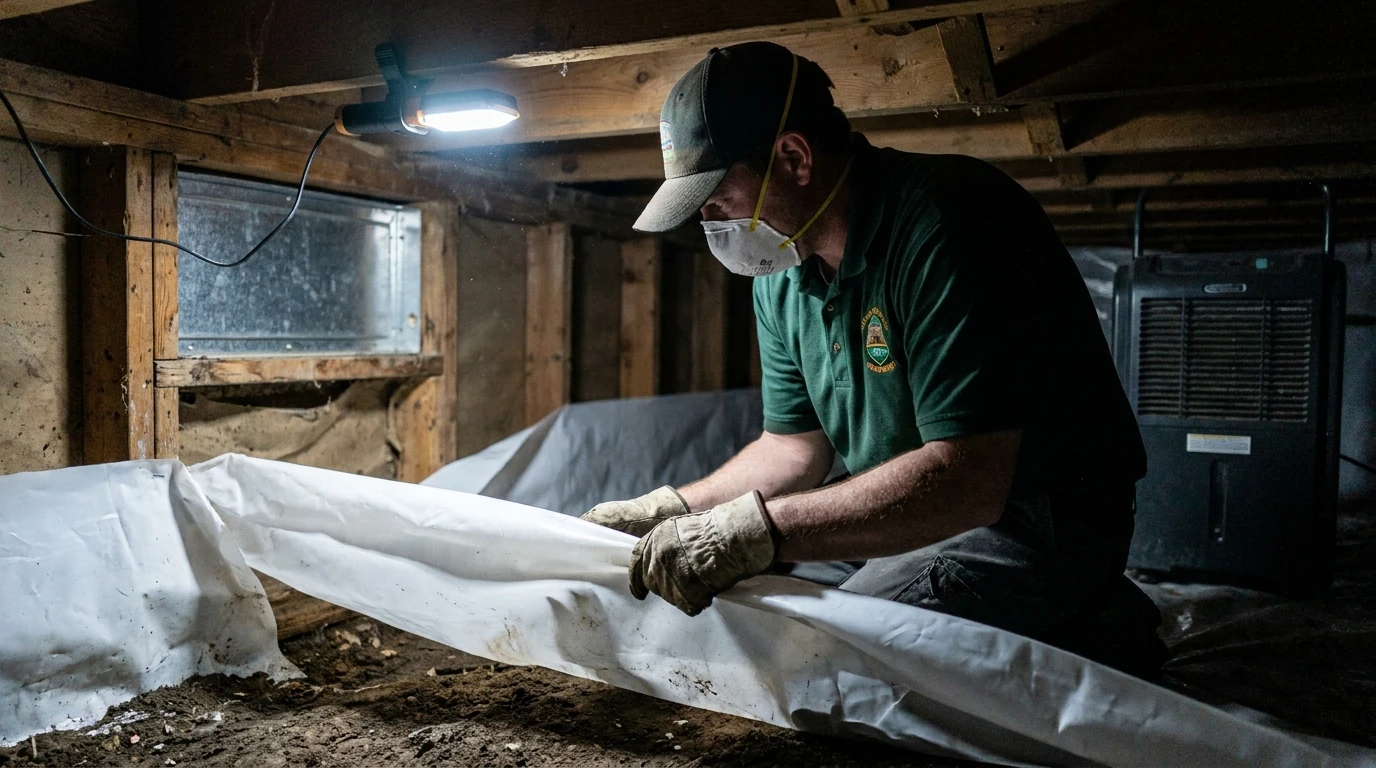
Most homes built before the 1990s around Middlesex, Wilson, and Smithfield sit on pier-and-beam foundations with open vents around the perimeter and bare dirt or a thin, failing vapor barrier underneath. Ground moisture evaporates constantly into that crawl space air. Warm indoor air rising through the house (the stack effect) draws that moist crawl space air up through floor penetrations, duct chases, and plumbing gaps into the living space above it. Your AC is then fighting a moisture source it was never sized to handle. If a hygrometer check and a flashlight look under the house show standing water, a sagging vapor barrier, or condensation on ductwork, a crawl space encapsulation assessment, not a bigger AC unit, is usually the right next step. Go Green Restoration of NC handles these assessments across Nash, Johnston, and Wilson County communities.
Dehumidifier vs Crawl Space Encapsulation: Which One Actually Fixes It?
A portable or whole-house dehumidifier treats humidity where you live; encapsulation treats humidity at its source. Which one you need depends on where the moisture is actually coming from.
A standalone dehumidifier in a living space makes sense when the house is reasonably sealed and the humidity is seasonal and outdoor-driven. But if you find yourself emptying a dehumidifier tank daily, or a crawl space inspection shows standing water, exposed dirt, or a torn vapor barrier, a dehumidifier is just bailing water while the source keeps filling the bucket. Encapsulation, which seals the crawl space floor and walls with a heavy vapor barrier and conditions the space with a dedicated dehumidifier sized for it, addresses the actual intake point instead of chasing the symptom room by room.
What Should I Do Next to Lower Humidity in My House?
Start with a hygrometer reading in two or three rooms and a flashlight check of the crawl space access. If the number sits above 50 percent indoors and the crawl space shows ground moisture, a vapor barrier that’s lifted off the dirt, or musty air when you open the hatch, that’s the source, not your thermostat setting.
From there, a crawl space moisture assessment gives you a real answer instead of a guess: whether sealing and conditioning the space will solve the humidity problem, or whether duct leaks and AC sizing are the bigger factor. Request a crawl space assessment before buying another dehumidifier that only treats half the problem.
A humid house rarely has one single cause, but it almost always has one dominant one. Finding it with a meter and a flashlight, rather than cranking the AC colder, is what actually gets the number back into the 30 to 50 percent range the EPA recommends and keeps it there through next summer.
About Go Green Restoration of NC
Go Green Restoration of NC is based in Middlesex, NC, and serves homeowners and property managers across Nash, Johnston, and Wilson counties and the greater Raleigh-Durham area, available 24/7. Their crews handle crawl space encapsulation, mold inspection and remediation, water damage restoration, and air duct cleaning across the region’s mix of older pier-and-beam homes and newer builds. Call Go Green Restoration of NC at (919) 906-5473 to schedule a crawl space moisture assessment.