
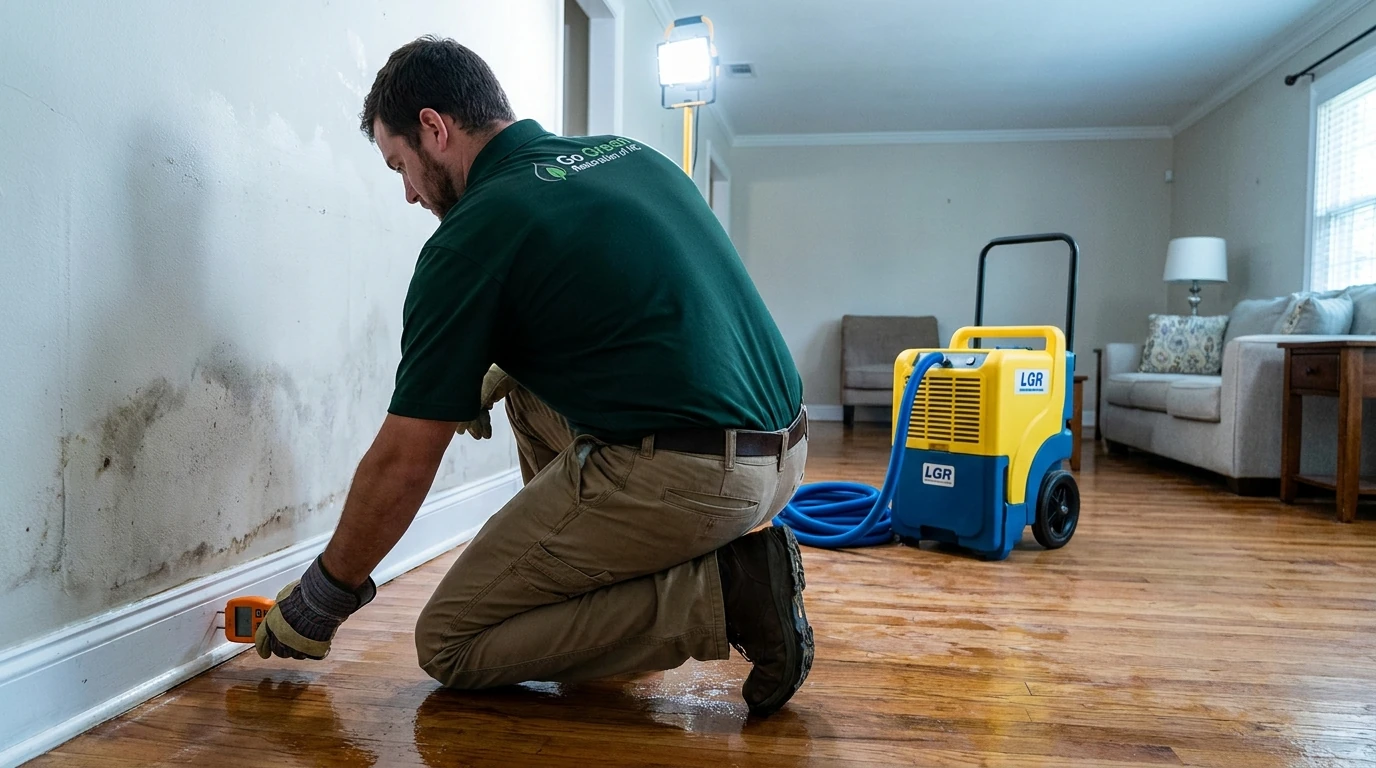
TL;DR: Water damage is any unwanted water intrusion into a structure, from a burst pipe to a slow roof leak, and it’s classified by source (Category 1, 2, or 3) and by how much of the structure absorbed water (Class 1 through 4). The first 24 hours matter most: stop the water source, remove standing water, and get air moving before mold has a chance to start, which can happen in as little as 24 to 48 hours on wet drywall and carpet padding.
If you’re standing in a Middlesex living room near the US-264 corridor looking at a water stain spreading across the ceiling, or you just found an inch of water in the crawl space after a washing machine hose let go, you need two things right now: a way to stop the source, and a clear sense of what happens next. This guide covers both, plus what homeowners insurance in North Carolina typically pays for and when it’s time to bring in a crew with extraction equipment instead of a shop vac.
What Counts as Water Damage, and How Serious Is It?
Water damage is classified two ways: by what’s in the water (Category) and by how much of the structure it soaked (Class). A burst supply line is Category 1, clean water. A dishwasher backup or long-standing Category 1 water left more than 48 hours gets reclassified as Category 2, gray water. Sewage backups and floodwater from outside the home are Category 3, black water, which the IICRC treats as contaminated and requiring different protective equipment during cleanup.
Class refers to the extent of absorption, not the water source. Class 1 affects a small area with low-permeance materials. Class 4 means water has soaked into hardwood, plaster, or concrete and will need specialty drying methods and more time. A single-room leak from a window AC unit is a very different job than a slab leak that’s been running under the subfloor for a week, even though both are technically “water damage.”
What Should You Do in the First 24 Hours?
Stop the water source, then remove standing water and start air movement, in that order. Every hour water sits on flooring or inside wall cavities increases the chance it migrates into materials that are expensive to dry, like subfloor and insulation.
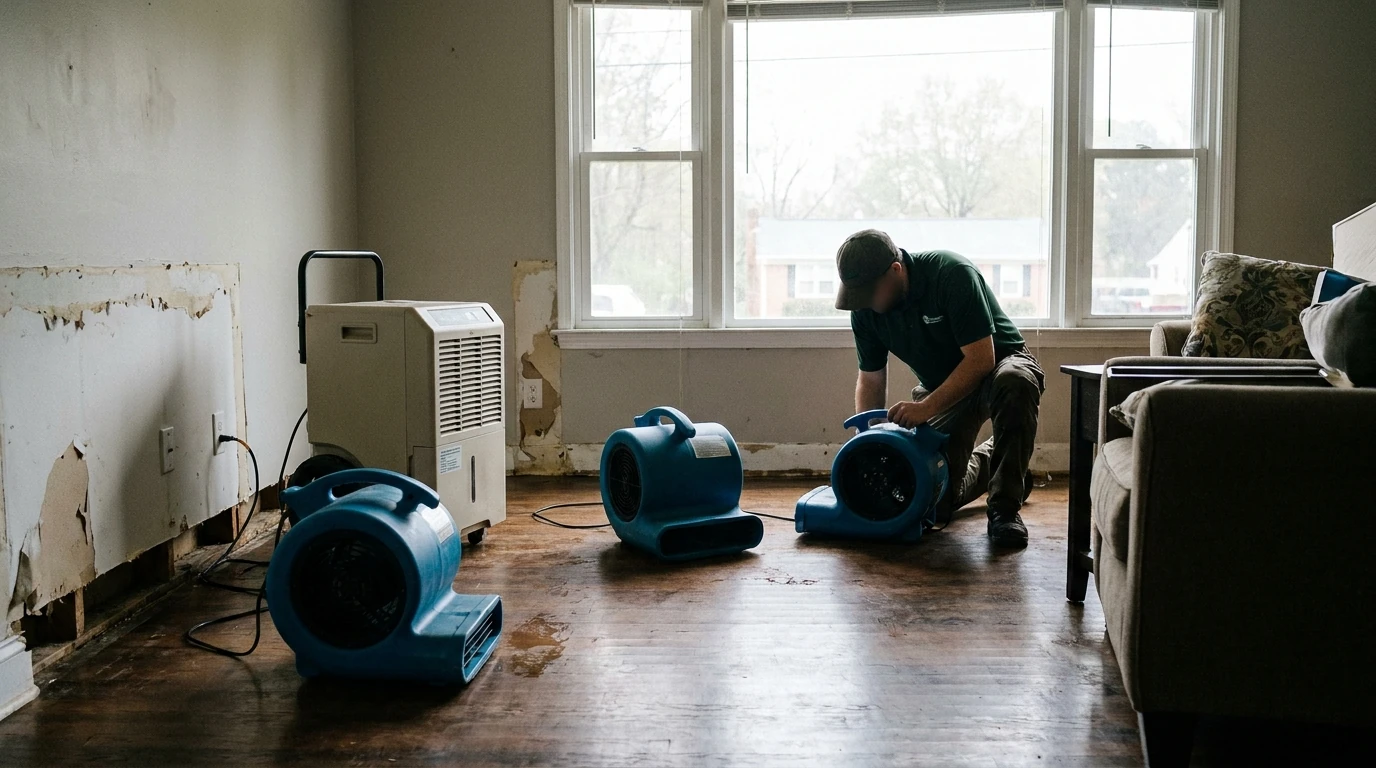
Shut off the water at the fixture or the main if you can’t isolate it. Cut power to any outlets or fixtures in the affected area if water is near them, and don’t do this yourself if it means stepping into standing water near an outlet. Then move furniture and rugs off wet flooring, run a wet/dry vac on standing water, and open windows or run box fans and a dehumidifier if you have one. Photograph everything before you move or discard anything; your insurance adjuster will want it.
Our post on what to do in the first 24 hours after water damage walks through this in more detail room by room, and the burst pipe checklist covers the supply-line scenario specifically.
Will Homeowners Insurance Cover Water Damage Repairs?
Most NC homeowners policies cover water damage that’s sudden and accidental, like a burst pipe or a failed water heater, but exclude damage from gradual leaks or deferred maintenance. The distinction the adjuster is checking for is whether the water loss happened suddenly or built up slowly over weeks or months.
A pipe that freezes and splits overnight is typically covered. A slow drip under a sink that’s been staining the cabinet floor for six months usually isn’t, because the policy treats that as a maintenance issue the homeowner should have caught. Flood damage from rising water outside the home, think Tar River or Neuse River overflow after heavy rain, is excluded from standard homeowners policies entirely and requires separate flood insurance through the National Flood Insurance Program.
Documentation is what moves a claim along. Photos of the source, a moisture log showing drying progress, and a written scope of work from whoever handles the mitigation all support the claim. Our deeper breakdown is in does homeowners insurance cover water damage, and typical regional repair costs are in how much does water damage restoration cost in NC.
Who Should You Call for Water Damage Cleanup in Middlesex, NC?
For anything beyond a small, contained spill you dried yourself within a few hours, call a restoration company before you call a general contractor. A restoration crew has moisture meters, hygrometers, and commercial dehumidifiers to verify materials are actually dry, not just dry to the touch, which matters because trapped moisture behind drywall or under flooring is exactly what feeds mold growth.
Go Green Restoration of NC answers calls 24/7 and responds to water damage across Middlesex, Nash County, and the surrounding Johnston County line communities, with drying handled to the IICRC S500 standard for water damage restoration. If the water has been sitting more than a day, or you’re smelling a musty odor starting to develop, that’s the point to stop troubleshooting on your own and request a water damage assessment.
A quick gut check on which type of pro to call: a plumber for an active leak that’s still running, a restoration company for everything that happens after the water is on the floor, and your insurance company only after mitigation has started, since most adjusters want to see that you took reasonable steps to limit the damage.
Water that sits for 24 to 48 hours on drywall, baseboards, or carpet padding is long enough for mold to start, which is why the drying timeline matters as much as the cleanup itself. If you’re seeing discoloration or smelling must after a dry-out, our post on how fast mold grows after water damage explains the window you’re working against.
About Go Green Restoration of NC
Go Green Restoration of NC is a 24/7 water damage and restoration company based in Middlesex, NC, serving Nash, Johnston, and Wilson County communities along the US-264 corridor. Their crews dry structures to the IICRC S500 standard and handle water damage, flood cleanup, burst pipes, and the mold prevention work that often follows a water loss. This post was written with input from the Go Green Restoration of NC team.
Need help now? Call Go Green Restoration of NC at (919) 906-5473.