
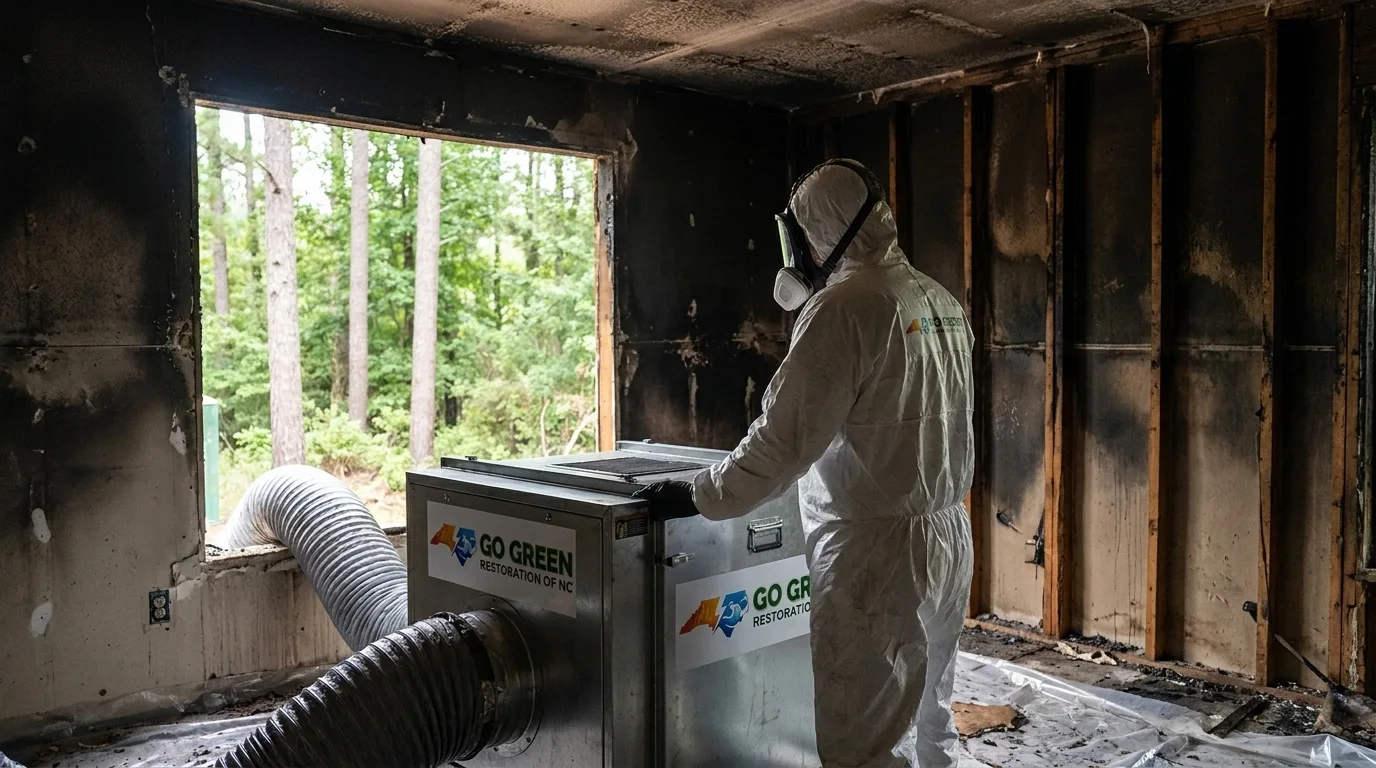
24/7 Emergency Fire Damage Restoration in Nashville
24/7 emergency fire damage restoration in Nashville, NC. Insurance billing accepted. Call (919) 906-5473.
Our technicians are dispatched from our Middlesex, NC headquarters and are typically on-site in Nashville within 60 minutes of your call.
Fire damage in your Nashville home or business? Go Green Restoration of NC answers 24/7, and getting a crew moving fast matters more than most homeowners realize, because soot residue keeps etching into finishes and metal fixtures start corroding within hours of a fire being knocked down. Whether the loss started in the kitchen or spread through the attic, the faster cleanup begins, the more of the structure and contents can actually be saved.
Why Nashville Properties See Fire Damage Issues
Nash County’s mix of older frame farmhouses, brick ranch homes from the 1950s and 60s, and newer construction out toward the edges of town means fire behaves differently from one job to the next. Many of the older homes in and around Nashville still carry original wiring or have been updated piecemeal over decades, and that patchwork is a common ignition point we see in this part of the county. Rural and semi-rural properties outside the town limits also rely on volunteer fire departments, which can mean a slightly longer knockdown time compared to in-town addresses, and that extra time translates directly into deeper smoke penetration and more acidic soot settling into drywall, insulation, and HVAC ductwork.
Summer heat and humidity across central North Carolina compound the problem after the fire trucks leave. Charred materials that stay wet from fire suppression water start growing mold within a day or two in Nashville’s climate, so a fire loss here is almost always a combined fire-and-water job, not just a soot cleanup.
Our Fire Damage Restoration Process in Nashville
We start with a walkthrough to separate what can be cleaned from what has to come out, since structural framing, subfloor, and insulation exposed to direct flame usually need removal regardless of how clean they look on the surface. From there, the process generally follows a few stages:
- Board-up and tarping to secure the structure and stop weather intrusion, especially important given how quickly afternoon thunderstorms roll through this part of the state in summer
- Water extraction from suppression efforts, dried in line with industry drying standards before any smoke cleaning begins
- Soot and residue removal from walls, ceilings, and hard surfaces, using cleaning agents matched to the soot type (protein-based residues from a kitchen fire clean up very differently than the dry, powdery soot from a fast-burning wood fire)
- HVAC and duct cleaning, since smoke odor recirculated through ductwork is one of the most common reasons a fire smell lingers weeks after the visible damage is gone
- Odor neutralization using thermal fogging or ozone treatment in unoccupied spaces, followed by sealing of any surfaces that can’t be fully deodorized
Older Nashville homes with plaster walls or real wood trim often need a gentler hand during soot removal than newer drywall construction, since aggressive scrubbing can pull plaster finish or strip original wood stain.
Nashville Insurance & HOA Coordination
Most fire claims in this area move through standard homeowner’s policies, and we document the loss thoroughly, room by room, with photos of both visible damage and the areas that look fine but tested positive for smoke residue, since adjusters need that evidence to approve full remediation rather than a surface clean. For properties inside one of the newer subdivisions on Nashville’s outskirts that fall under an HOA, we coordinate any required exterior repair approvals (roofing, siding, board-up materials) so repairs don’t stall waiting on a committee sign-off.
Local note
A detail that catches a lot of Nashville homeowners off guard: well water, common on properties just outside town, can leave mineral staining on fire-suppression-soaked drywall and flooring that looks like additional smoke damage but is actually just hard water residue reacting with soot. We test for this before quoting a full tear-out, because in a lot of cases that staining cleans up without having to replace the material.
If fire has touched your Nashville property, don’t wait on the smoke smell to fade on its own, it won’t, and the longer soot sits on painted surfaces and metal the harder and more expensive it gets to remove. Go Green Restoration of NC answers around the clock and works directly with your insurance carrier to get the fire and smoke cleanup moving before secondary damage sets in.
Fire Damage Restoration in Nashville: Service Coverage
Frequently Asked Questions
How fast can you arrive for fire damage restoration in Nashville?
How does Nashville's reliance on volunteer fire departments affect smoke damage severity?
Do older Nashville homes with plaster or original wood trim need different fire cleanup methods?
Can well water near Nashville cause staining that looks like fire damage?
Will fire suppression water left in my Nashville home turn into a mold problem?
Does my Nashville-area HOA need to approve board-up or roofing repairs after a fire?
Will my homeowners insurance cover fire damage restoration in Nashville?
Fire Damage Restoration response in Nashville
Most Nashville calls see a technician on-site within 60 minutes from our Middlesex headquarters.