
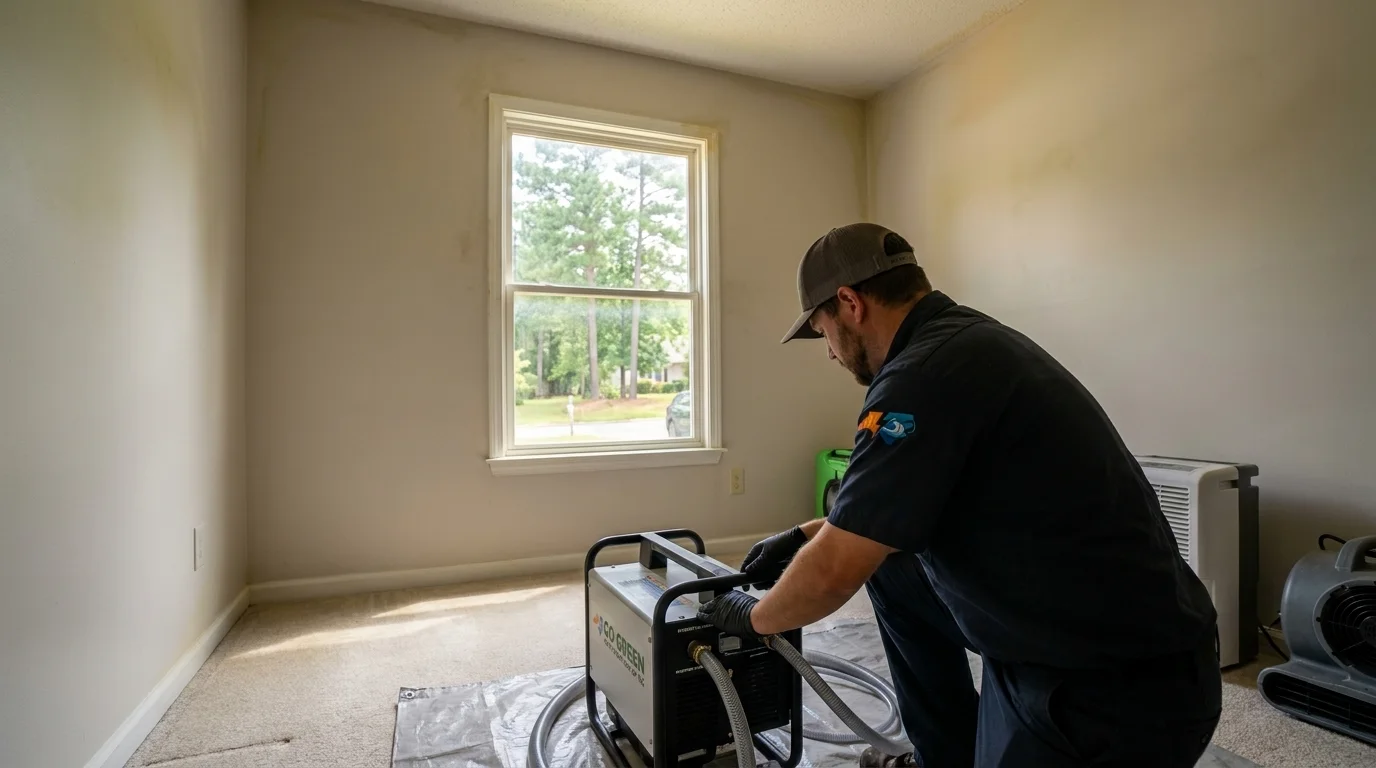
Odor Removal and Deodorization in Middlesex
24/7 odor removal and deodorization in Middlesex and surrounding areas. Insurance billing accepted. Call (919) 906-5473.
What Odor Removal and Deodorization actually involves
A smoke smell that lingers weeks after a fire, a musty note that shows up every time the HVAC kicks on, or a pet accident that soaked into subfloor long before anyone found it: these odors don’t come out with candles, carpet powder, or an open window. That’s because the smell isn’t sitting on the surface. It’s embedded in porous materials, trapped in HVAC ductwork, or bonded to drywall and framing at a molecular level, and masking it only works until the humidity changes or the furnace runs again.
Real odor removal means identifying where the source material actually is, not just where the smell is strongest, and then matching the treatment method to the type of odor. Protein-based odors from fire behave differently than biological odors from sewage or decomposition, and both behave differently than musty odors tied to hidden moisture. Equipment ranges from hydroxyl generators and ozone machines to thermal foggers that carry deodorizing agents into the same cracks and fiber structures the odor molecules penetrated in the first place. Depending on the source and the size of the space, treatment can run from a few hours for a contained odor to several days when ductwork, insulation, or structural cavities are involved.
Our process
- Source identification. We trace the odor to its actual origin, not just the room where it’s noticeable, checking subflooring, wall cavities, ductwork, and contents separately from structural surfaces.
- Odor classification. Smoke, sewage, decomposition, and mold-related odors each require a different chemical approach, so we identify the odor type before choosing a treatment method.
- Source removal. Deodorization only holds if the contaminated material is gone first, whether that’s charred debris, saturated insulation, or soft materials that have absorbed the odor beyond cleaning.
- Treatment application. Depending on the situation, we use thermal fogging to penetrate fibers and cracks, ozone treatment for vacant spaces that need deep oxidation, or hydroxyl deodorization when people or pets need to remain on-site during treatment.
- Verification. We re-check the space after treatment and after it’s returned to normal temperature and humidity, since some odors reappear once materials warm up or airflow resumes.
What separates a good odor removal response from a bad one
The most common mistake is treating the symptom instead of the source: running a fogger or air scrubber in a room without first removing the saturated carpet pad, charred framing, or water-damaged drywall underneath. The smell goes away for a few days and comes back the first humid afternoon. A good response always pairs source removal with treatment, not one or the other.
Ozone treatment gets misused often, too. It’s effective in vacant, sealed spaces, but it reacts with rubber, certain plastics, and some finishes, and it’s not safe to run while people, pets, or plants are present. Operators who don’t understand that risk either skip ozone when it would help, or use it in occupied spaces where it shouldn’t be run. Insurance adjusters reviewing odor claims typically want documentation of what was removed versus what was treated, since those are billed and justified differently, and a scope that only lists “deodorization” without source removal often gets pushback.
What does Odor Removal and Deodorization cost?
Costs vary with the size of the affected area, the type of odor, and whether source materials need to be removed before treatment can start. A single contained room costs far less than a whole-house odor tied to HVAC contamination or a fire loss. Every loss is different, which is why Go Green Restoration of NC provides a written scope before any work begins. Homeowners insurance typically covers odor removal when it results from a covered peril, such as fire or a sudden water loss, but it generally does not cover odor from long-term neglect or pet damage unrelated to a covered event.
| Scenario | Typical range |
|---|---|
| Single room, mild odor (pet or musty smell) | $150 - $450 |
| Whole room, smoke odor after small fire | $500 - $1,500 |
| HVAC and ductwork deodorization | $450 - $1,200 |
| Whole-house odor after significant fire | $2,000 - $6,000 |
| Severe biological or decomposition odor | $1,500 - $5,000+ |
Seasonal & regional considerations
Middlesex summers bring heavy humidity, and that humidity reactivates musty and biological odors that seemed resolved during drier months, especially in crawlspace-foundation homes common throughout eastern Wake and Nash counties. Odors tied to moisture problems often need a second look once the weather turns warm, since the same conditions that caused the smell can bring it back.
Service area
Go Green Restoration of NC handles odor removal and deodorization throughout Middlesex and surrounding communities, including Zebulon, Wilson, Rocky Mount, and the surrounding towns across Wake, Nash, and Wilson counties.
If a smell keeps coming back no matter how many times you’ve cleaned, call (919) 906-5473 to start professional odor elimination that treats the actual source, not just the symptom.
Services We Handle
- Odor Control & Deodorization
Frequently Asked Questions
Does homeowners insurance cover odor removal and deodorization?
What's the difference between ozone treatment and hydroxyl deodorization?
Why does the smell come back after I've already cleaned the area myself?
Can thermal fogging damage my belongings or finishes?
How long does it take for smoke odor to fully clear after treatment?
Do I need to remove carpet or drywall before odor treatment will work?
Looking for the best odor removal and deodorization company in Middlesex?
Go Green Restoration of NC provides odor removal and deodorization in Middlesex, NC and the surrounding area. We answer calls 24/7 — call (919) 906-5473 for immediate help.
Need Odor Removal and Deodorization now?
We respond 24/7 across Middlesex and surrounding NC cities.
Related Coverage
- Our Restoration Services
- Contact Go Green Restoration of NC
- Restoration Services in Archer Lodge
- Restoration Services in Clayton
- Restoration Services in Durham
- Restoration Services in Elm City
- Restoration Services in Kenly
- Restoration Services in Knightdale
- Restoration Services in Lake Royale
- Restoration Services in Louisburg
- Odor Removal and Deodorization in Nashville
- Restoration Services in Pine Level
- Odor Removal and Deodorization in Raleigh
- Restoration Services in Rocky Mount